Why Your Warehouse Throughput Problem Is a Conveyor Problem — And How Conveyors Fixes It
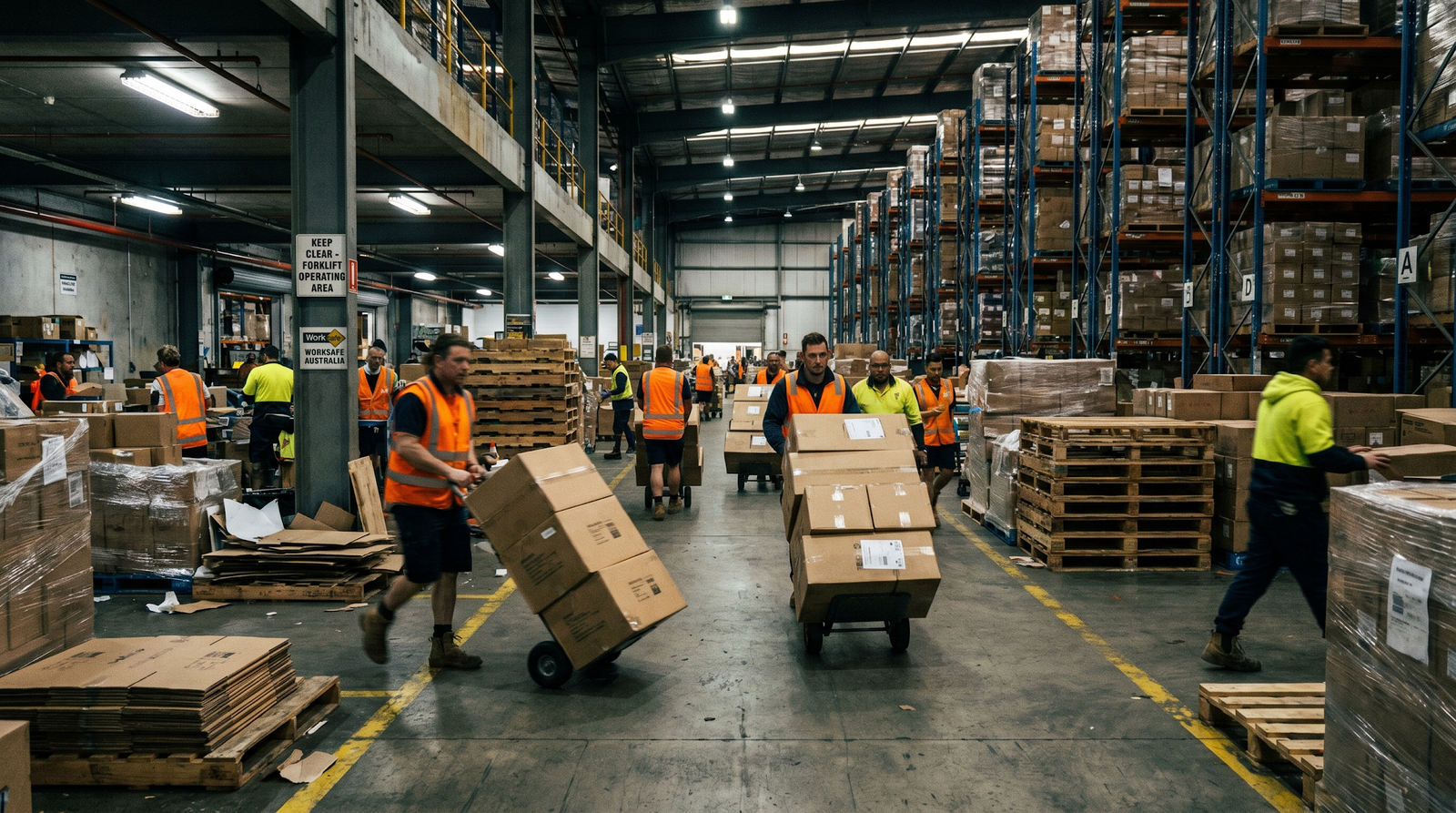
If you’re running a distribution centre or warehouse in Australia and your operation still relies heavily on manual movement of goods, you’re paying more than you need to — in labour, in errors, and in time.
The question isn’t whether automation makes sense. The data on that is settled. The question is: which conveyor system fits your operation, and who installs it properly?
At Smarter Automated Solutions (SAS), we’ve deployed Interroll conveyor systems across warehouse and logistics environments throughout Australia. This guide breaks down how Interroll’s platforms work, what problems they solve, and how to choose the right configuration for your facility.
Before we get into products, let’s name the actual problems warehouse operators face day-to-day:
These aren’t abstract concerns. They’re the specific operational pain points that Interroll’s conveyor platforms are engineered to address.
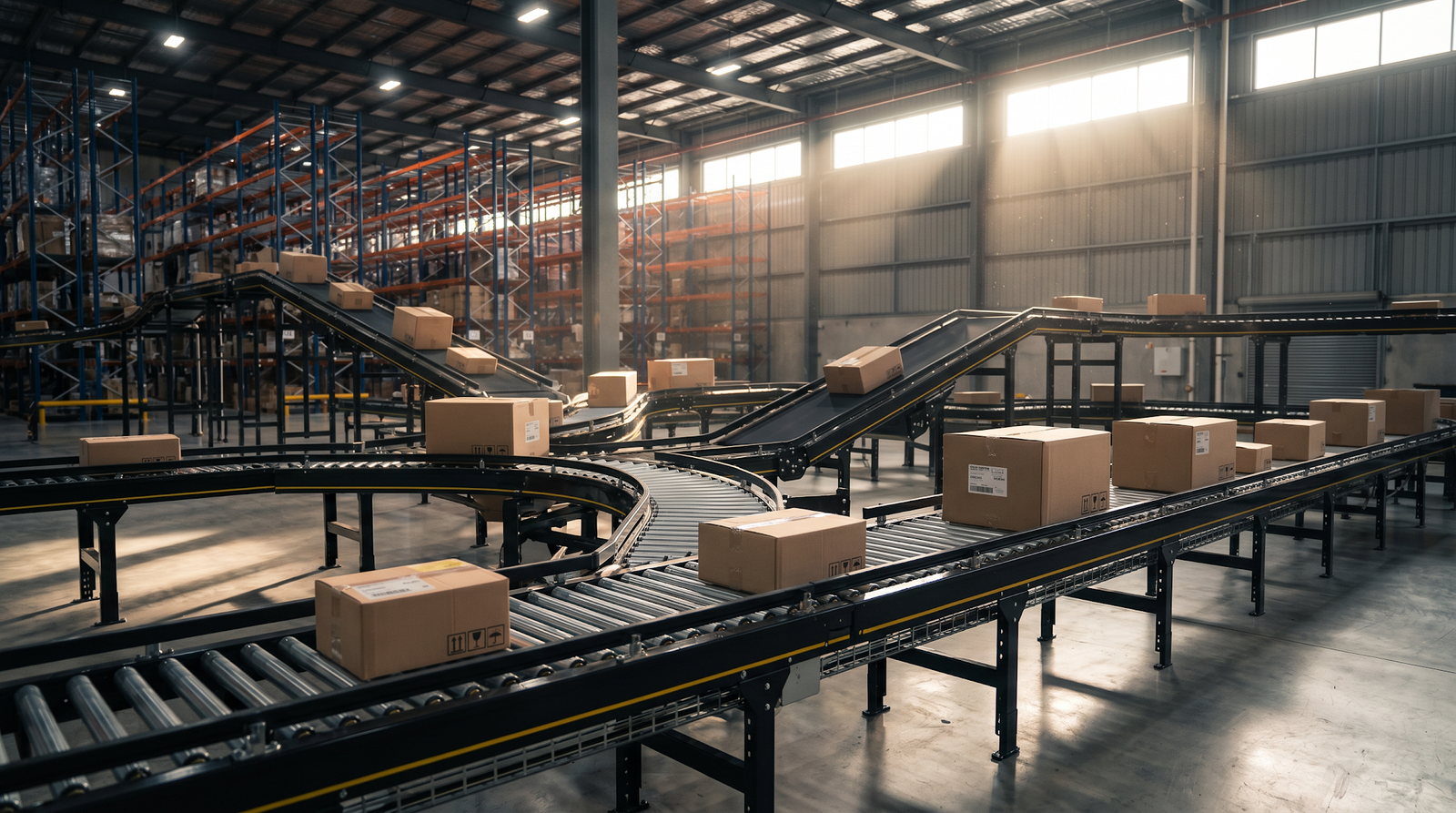
Interroll is a Swiss-headquartered global manufacturer of conveyor and material handling technology, operating in over 40 countries. Their conveyor platforms are used in some of the world’s most demanding logistics, e-commerce, food processing, and airport environments.
What sets Interroll apart from generic conveyor suppliers is their modular platform philosophy: systems are designed to be expanded, reconfigured, and integrated with robotics and warehouse management software — not locked into a single layout.
SAS partners with Interroll to supply, design, and install their systems for Australian businesses.
Best for: Unit handling, carton and tote movement, zone picking, goods-to-person systems The MCP is Interroll’s flagship platform and the industry standard for modular conveyor systems in unit and container handling. It uses decentralised controls and zero-pressure accumulation (ZPA) — meaning products queue without contact, preventing damage and reducing jam events.
Key capabilities:
The problem it solves: You have multiple warehouse zones — receiving, pick faces, packing, despatch — and goods need to flow between them reliably without constant manual intervention or the risk of product damage. The MCP creates a controlled flow network that connects those zones.
Best for: Fast-growing operations that need speed and simplicity during deployment MCP PLAY is Interroll’s evolved version of the MCP platform, engineered for faster installation, simpler commissioning, and smarter integration. For operations in rapid growth phases, MCP PLAY reduces the complexity typically associated with deploying modular conveyor networks.
The problem it solves: You need to get a conveyor system running fast and expect to expand it as the business grows. Traditional conveyor installations are slow to commission and rigid once deployed — MCP PLAY addresses both constraints.
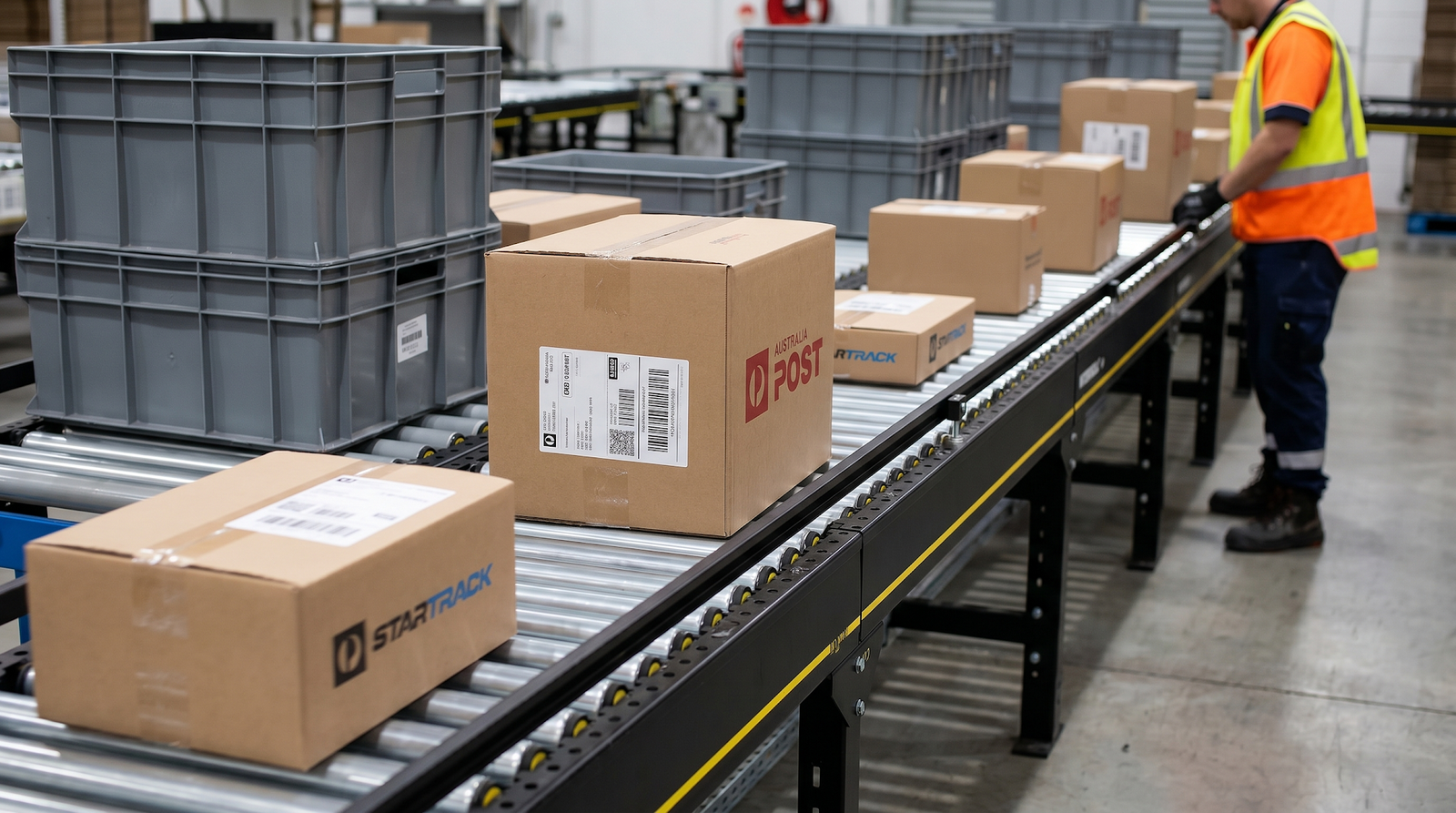
Best for: High-volume e-commerce, parcel handling, courier and express operations The HPP is built for throughput. It handles packages, parcels, and polybags at high speed without compromising reliability. For operations processing thousands of items per shift, the HPP provides the mechanical durability and control precision to keep pace.
Key capabilities:
The problem it solves: Your current conveyor system can’t keep up with volume during peak periods, or it breaks down under sustained high-cycle loads. The HPP is the platform for operations where throughput is the primary constraint.
Best for: Receiving, palletising, de-palletising, storage induction, and outbound staging The MPP handles full pallet transport through your facility. The standard configuration supports loads up to 500 kg, while the heavy-duty variant manages up to 1,500 kg — covering the vast majority of pallet profiles used in Australian warehousing.
Key capabilities:
The problem it solves: Your pallet movements — from dock to storage, storage to production, and production to despatch — are handled manually or with forklifts, creating congestion, safety risks, and throughput constraints. The MPP removes forklifts from internal flows and replaces them with consistent, controlled pallet movement.
Best for: Food processing, beverage production, pharmaceutical handling The SHC is a stainless steel conveyor platform engineered specifically for hygiene-intensive environments. Every design decision — from drain angles to material selection — is made for compliance with cleaning-in-place (CIP) protocols and food safety standards.
Key capabilities:
The problem it solves: Standard conveyors cannot be adequately cleaned in food-processing environments, creating contamination risk and compliance failures. The SHC provides conveyor capability without compromising hygiene standards.
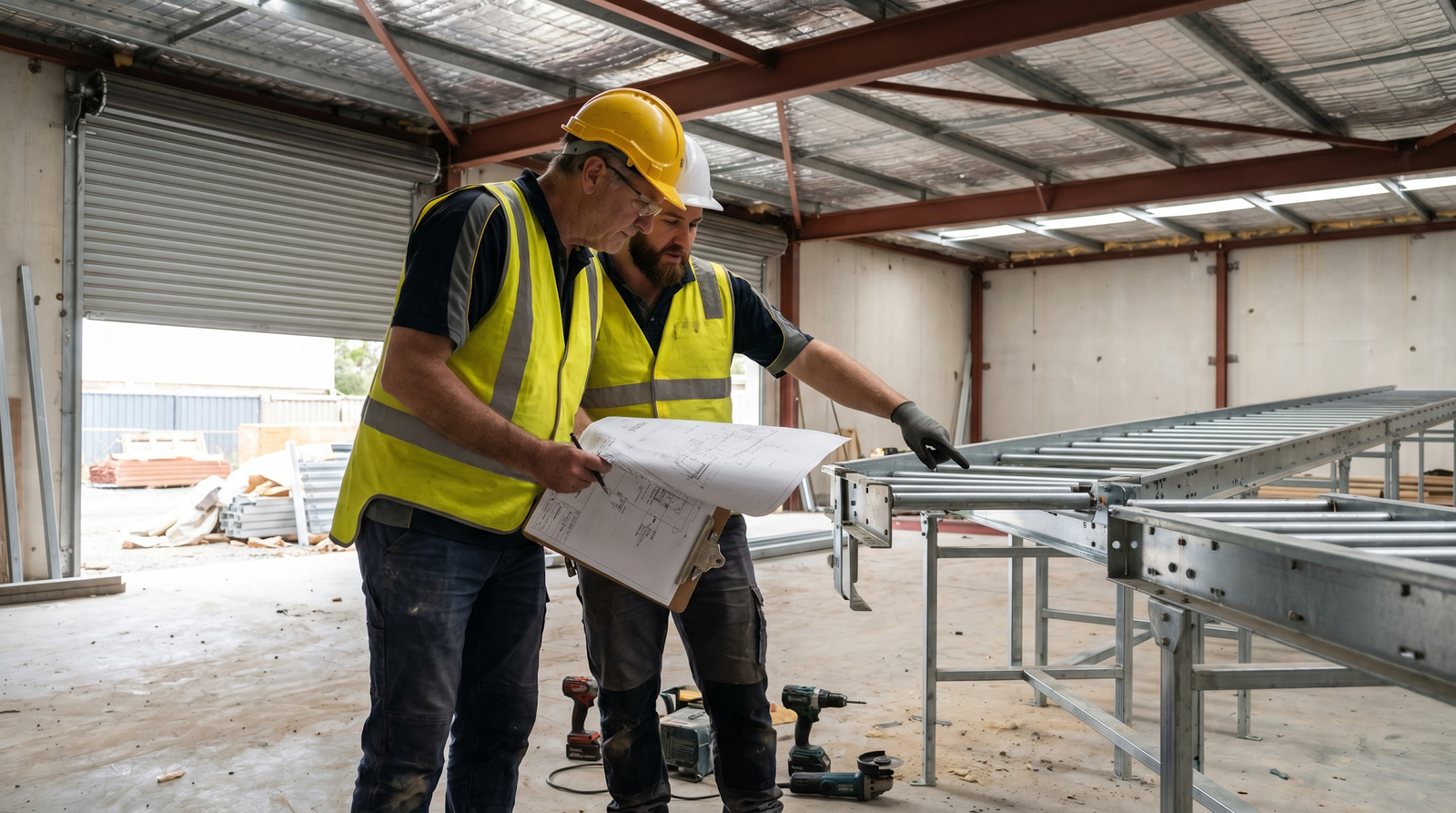
Buying conveyor equipment is not the same as having a working conveyor system. The gap between those two things is design, engineering, project management, and integration — and it’s where most automation projects succeed or fail.
SAS brings 80 years of combined industry experience to every project. Our process:
| Requirement | Recommended Platform |
|---|---|
| Carton/tote movement between zones | MCP or MCP PLAY |
| High-volume parcel/package handling | HPP |
| Full pallet transport within facility | MPP |
| Food or pharma hygiene compliance | SHC |
| Fast deployment with future expansion | MCP PLAY |
| Heavy-duty pallet loads (500 kg–1,500 kg) | MPP (Heavy Duty) |
If your requirements span multiple categories — for example, a distribution centre running both carton picking and full-pallet inbound — SAS designs hybrid systems that combine platforms within a single integrated flow.
What is the Interroll Modular Conveyor Platform (MCP)?
The Interroll MCP is a scalable, modular conveyor system for moving cartons, totes, and boxes in warehouse and distribution environments. It uses decentralised RollerDrive technology and zero-pressure accumulation to move goods without contact between items, reducing damage and enabling flexible routing.
How much weight can Interroll pallet conveyors handle?
Interroll’s MPP (Modular Pallet Platform) handles loads up to 500 kg in the standard configuration and up to 1,500 kg in the heavy-duty variant.
Can Interroll conveyor systems integrate with warehouse management systems (WMS)?
Yes. Interroll conveyor systems can be controlled via PLC, Warehouse Control System (WCS), or standalone card logic, and are designed to interface with leading warehouse management and execution systems.
What industries use Interroll conveyor systems?
Interroll conveyors are deployed across warehouse and distribution, e-commerce fulfilment, food and beverage, pharmaceutical, manufacturing logistics, courier/parcel operations, and airport baggage handling.
What is zero-pressure accumulation (ZPA) in conveyor systems?
Zero-pressure accumulation means products queue on a conveyor without making contact with each other. Sensors detect downstream gaps and stop individual conveyor zones to hold items in place until space is available, preventing product damage from pile-up collisions.
Does SAS install Interroll conveyor systems in Australia?
Yes. SAS (Smarter Automated Solutions) is an authorised Interroll partner supplying, designing, and installing Interroll conveyor systems for Australian businesses. Contact our team for a facility consultation.
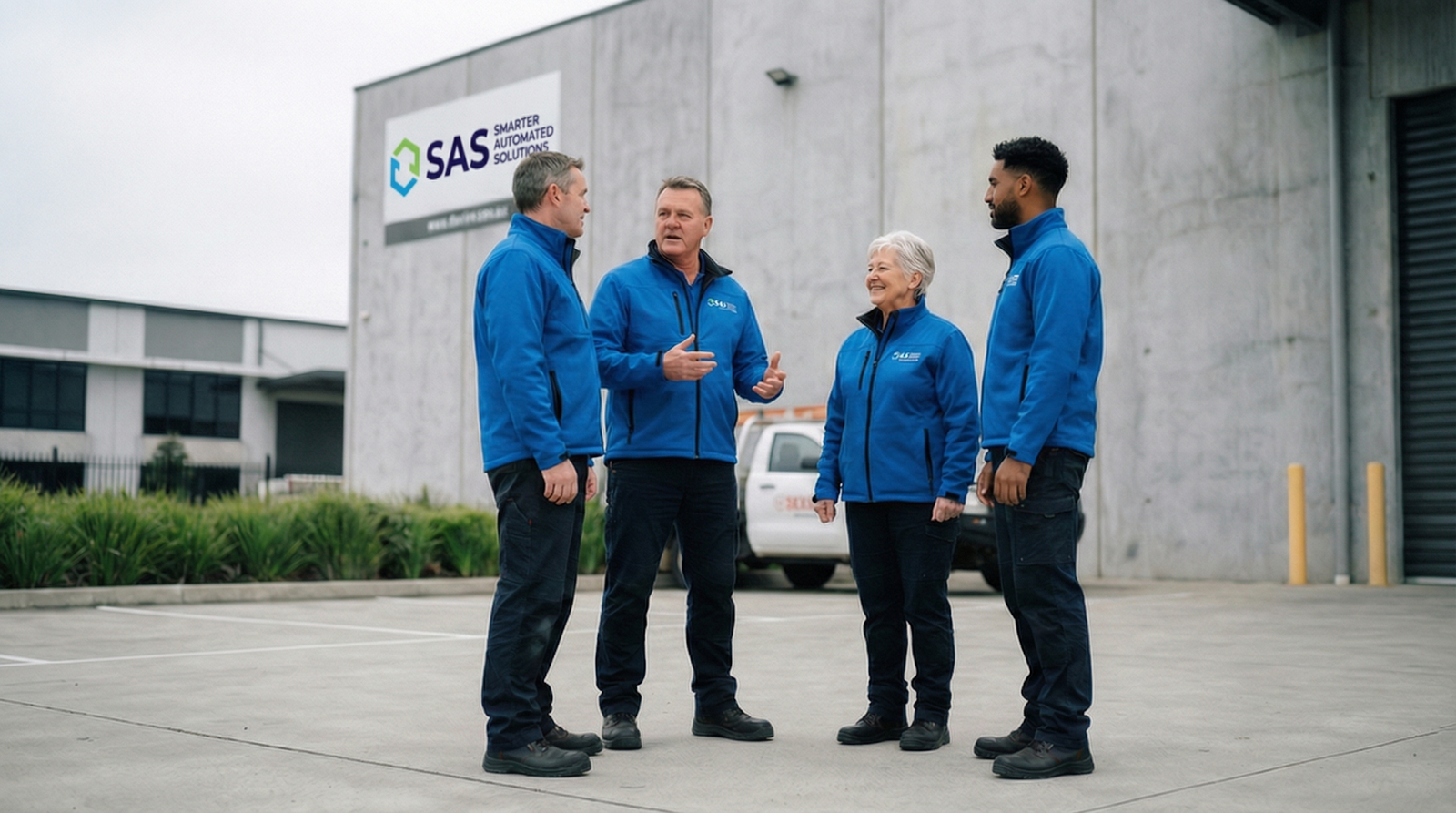
Every facility is different. Throughput requirements, product profiles, available floor space, and integration requirements all shape which Interroll platform — or combination of platforms — is right for your operation.
The fastest way to identify the right solution is to walk through your current operation with our team. We’ll identify the specific friction points in your material flow and give you a clear view of what a properly designed conveyor system would change.
Get in touch with SAS:
Or visit our Conveyor Solutions page to learn more about how we deploy carton conveyors, pallet conveyors, and sortation systems for Australian warehouses.

Direct-to-object bottle printing applies ink and colour straight onto a bottle's surface — glass...
Read More
If your warehouse is running out of floor space, your pick teams are walking kilometres every...
Read More
Picture your warehouse floor right now. A picker gets an order, grabs a trolley, and walks...
Read More